By Zynniro Team
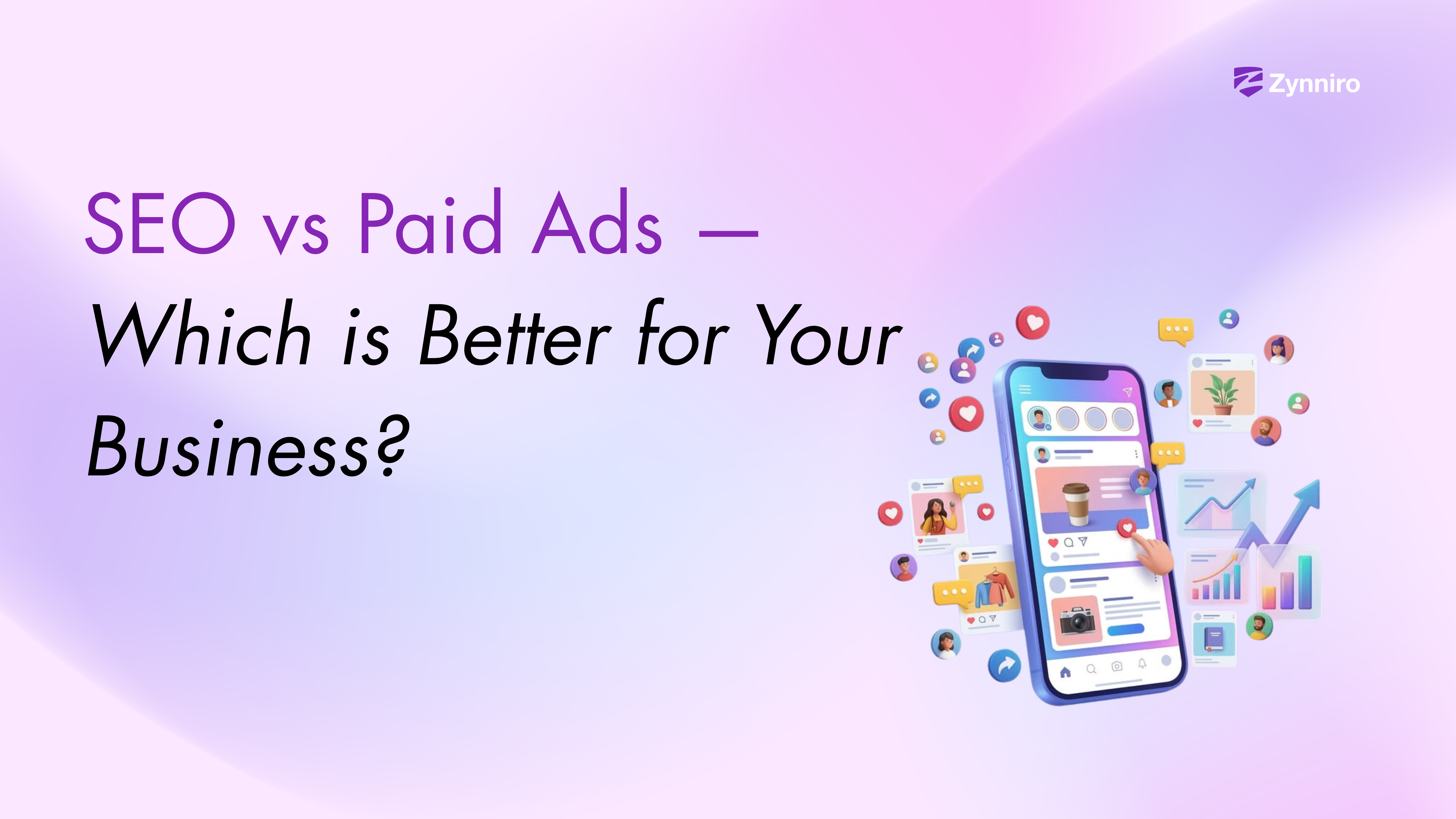
It is one of the most common questions we get from business owners: Should I invest in SEO or paid advertising? The honest answer is that it depends — on your timeline, budget, industry, and goals. But there is a clear framework for making the right decision.
In this guide, we break down the real differences between SEO and paid ads, when to use each, and what the smartest businesses do to get the best results from both.
Search engine optimization (SEO) is the process of improving your website's visibility in organic (unpaid) Google search results. It involves technical optimization, content creation, and link building — and it takes time to see results, typically 3 to 6 months.
The core advantage of SEO is compounding growth. A well-optimized page can generate consistent, free traffic for years. The cost per lead decreases over time as your rankings improve.
Pay-per-click advertising (PPC) means paying for placement in Google's search results or on social media platforms. You pay each time someone clicks your ad. Ads appear immediately after launch and stop the moment you stop paying.
The core advantage of PPC is speed and control. You can turn on a campaign today and generate leads tomorrow. You have granular control over who sees your ads, when, and what they see.
| Factor | SEO | Paid Ads (PPC) |
|---|---|---|
| Time to Results | 3–6 months | Immediate (hours) |
| Cost Per Click | Free (organic) | Paid per click |
| Longevity | Long-term compound | Stops with budget |
| Click-Through Rate | Higher (trusted) | Lower (labeled 'Ad') |
| Scalability | Slow but powerful | Fast and flexible |
| Best For | Long-term growth | Quick wins, launches |
| ROI Timeline | 6–12 months | Weeks |
The most successful businesses treat SEO and PPC as complementary, not competing. Use paid ads for immediate traffic and revenue while your SEO builds over time. Once SEO kicks in, you can reduce ad spend while maintaining lead volume — dramatically lowering your cost per acquisition.
Get a free marketing audit and a custom growth plan, with no commitment. See exactly where revenue is slipping away.